
A Professional Human Hair Extensions Supplier and Wholesale Hair Vendors

Fine hair leaves little room for error. The client wants more length and body, but traditional extensions often show through, feel heavy, or put too much strain on delicate strands. That gap between what clients want and what their hair can safely carry is exactly where invisible tape-in extensions have found their place.
After more than fifteen years producing extensions for salons and wholesale buyers, we have seen a clear shift: stylists who work with fine hair keep coming back to invisible tape-ins because the attachment disappears into the hair instead of sitting on top of it.
This article walks through what these extensions actually are, why they suit fine hair, where their limits are, how they compare with K-Tip, and what salons should check before ordering wholesale.

Invisible tape-in extensions are a semi-permanent method built around one idea: hide the bond. Standard tape-ins sandwich a section of natural hair between two visible adhesive tabs. Invisible versions integrate the hair directly into or over the attachment area, so the bonding point is covered by hair before the client even leaves the salon chair.
A complete system has four parts:
Human hair – the length and volume you are adding
Invisible attachment base – engineered so the hair conceals the bond
Professional adhesive tape – secures each piece to the natural hair
Flat bonding structure – sits close to the scalp without bulk
One honest note from the manufacturing side: "invisible" does not mean undetectable in every situation. The final look depends on product construction, hair density, color matching, and the installer's technique. No manufacturer can promise otherwise.
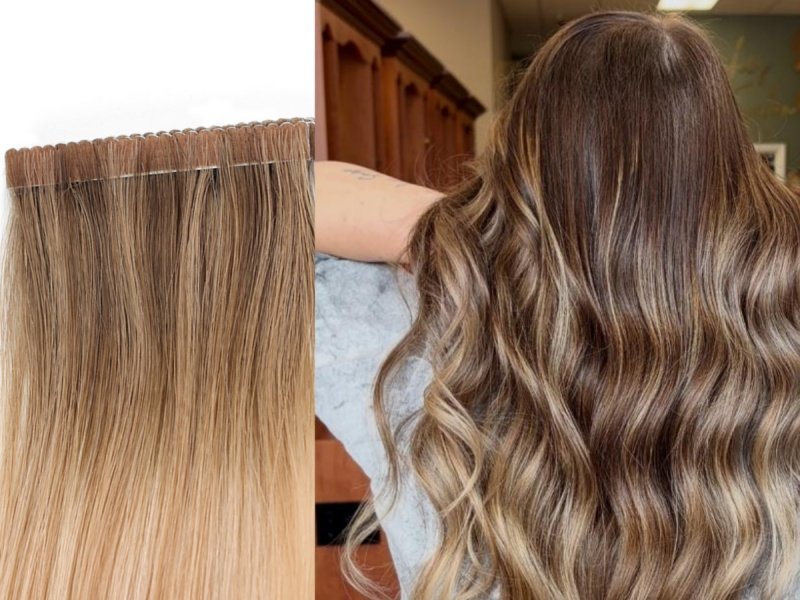
Fine hair has less density, so traditional tapes and bonds tend to peek through — especially at the temples, sides, and crown. Because the hair is built into the bonding structure of an invisible tape-in, there is simply less hardware to cover. Stylists still need to place pieces where enough natural hair can do its job, but the margin for error is far wider.
Bulky bonds are uncomfortable on sensitive scalps. The flat profile of a well-made invisible tape-in sits close to the head, so clients can tie their hair back, sleep, and train without feeling a ridge. Comfort still depends on piece weight and placement, but the design starts from a better baseline.
A single heavy bond concentrates all its load on one small section of hair. Tape-ins spread that load across a wider bonding area. For fine strands with limited strength per section, that difference matters more than most clients realize.
Tape-ins install quicker than strand-by-strand methods. A full head that takes hours with individual bonds can often be finished well within a standard appointment window. For salon chains managing booked-out schedules, that is real capacity — and easier maintenance visits mean clients come back.
Solid shades, rooted colors, highlights, and balayage options let stylists create depth without extra density. On fine hair, a smart two-tone blend often looks fuller than simply adding more hair. Our full retail range of invisible tape-in hair extensions on Everbeauting shows how far rooted and balayage blends can go.
Before recommending any method, it helps to separate two terms clients often mix up. Fine hair refers to strand diameter; thin hair refers to density. A client can have fine strands with high density, or coarse strands that are sparse. The extension plan differs in each case.
Each section of fine hair carries less weight safely. Overload it and you get tension, breakage, or traction damage over time. The thickest, fullest option is not the right default here — match the gram weight to what the client's hair can genuinely hold.
With less hair to cover bonds, placement options shrink. The temples, hairline, crown, and naturally sparse zones all need careful assessment before a single piece goes in.
Hair near the hairline is finer and more fragile. Pieces placed too close will peek out and pull. Professionals leave those zones alone and keep enough natural hair in front of every attachment.
Active shedding, scalp conditions, or severely weakened hair are reasons to pause. A responsible consultation sometimes ends with "not yet" — and that recommendation protects both the client's hair and the salon's reputation.
K-Tip extensions use individual keratin bonds on small sections of natural hair. Invisible tape-ins use flat adhesive attachments. Both can look natural; they just solve the problem differently.
| Invisible Tape-In | K-Tip | |
|---|---|---|
| Attachment | Flat adhesive tape, hair-integrated | Individual keratin bonds |
| Appearance | Bond concealed by design | Small individual bonds |
| Installation time | Shorter | Longer |
| Weight distribution | Spread across a bonding area | Concentrated per bond |
| Maintenance | Professional removal and retaping | Professional removal and re-bonding |
| Reusability | Hair reusable if condition allows | Depends on hair quality and bond condition |
| Placement flexibility | Follows tape position | Freestanding strand-by-strand |
For most fine-haired clients, the wider bonding area and concealed attachment address the two biggest pain points: visible bonds and concentrated tension. If the client also values shorter appointments, wholesale invisible tape-in hair extensions are usually the more practical inventory choice.
Clients who need highly customized strand placement — think intricate updos or filling specific sparse zones — get more freedom from individual bonds. The trade-off is installation time and the need for careful bond sizing. For those cases, our K-Tip and flat-tip keratin extensions over on Everbeauting cover the strand-by-strand route.
There is no universal "best." Flat, discreet, efficient → invisible tape-in. Highly customized placement and the hair can handle it → K-Tip. Consultation, not habit, should decide.
Start with lightweight pieces and a planned number of attachments rather than maximum density in one session. A subtle boost that holds up for months beats a dramatic transformation the hair cannot support.
The attachment should lie flat and neat. Some invisible tape-ins come in continuous 10 cm or 15 cm sections that stylists can cut to fit the head shape — a real advantage for custom installs, as long as the construction tolerates cutting. Buyers should confirm cutting recommendations with the manufacturer before ordering.
Fine hair exposes color mismatch faster than coarse hair. Work from root color, mid-length tone, undertones, and texture — then use rooted or balayage blends to soften the transition. See our guide to tape-in extensions for thin hair for placement and blending specifics.
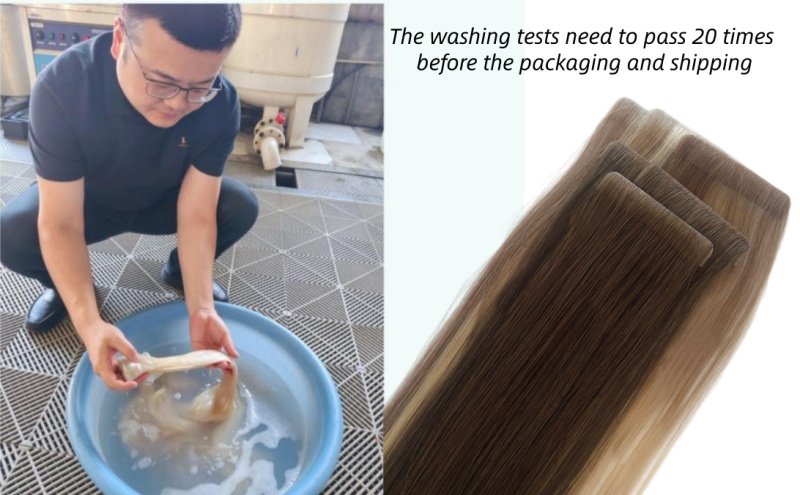
Smooth hair straight out of the box proves nothing. Wash it. Check whether strands stay manageable, whether tangling or shedding appears, whether the color holds. Cuticle-aligned hair (all cuticles running root to tip) resists friction far better over repeated washes, but raw material selection and processing matter just as much as alignment alone.
Assess first, choose appropriate weights, keep tension low, leave covering hair in front of every attachment, and follow the manufacturer's removal and retaping procedure (and stock up on replacement tape strips for maintenance appointments). Between salon visits, clients need a realistic aftercare routine — washing, drying, brushing, and sleeping habits all show up in how long the wear lasts.
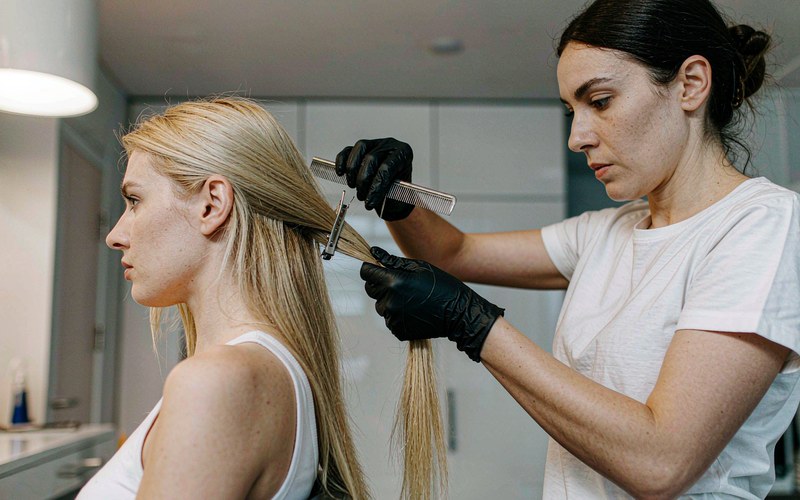
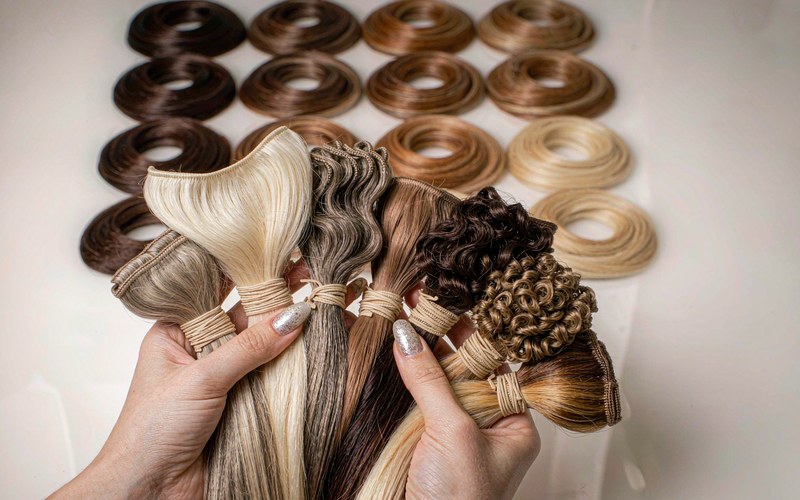
Product choice is only half the decision for salons and distributors. Supply consistency is the other half — and it is where many wholesale relationships break down.
Everbeauting Hair is a manufacturer serving overseas salons, distributors, and private-label brands. Samples are easy to make look good; what our partners actually need is reorder consistency: same specifications, same colors, same performance batch after batch.
We start with carefully sorted human hair and control each processing stage. Our advice to every buyer: judge the hair after washing, not before. That single habit filters out most quality problems before they reach your clients. More detail on our standards is on the quality control process page.
Machine-assisted hair insertion paired with manual inspection keeps attachment neatness and hair distribution consistent across batches. Buyers with specific attachment specifications are welcome to discuss them directly with us.
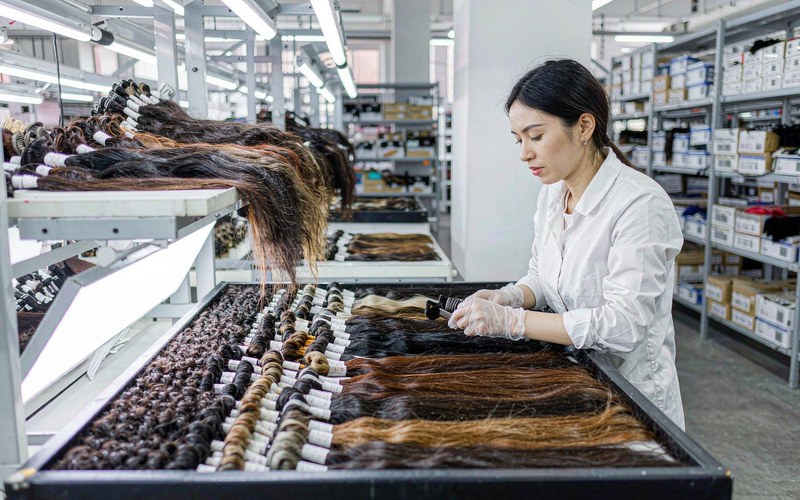
Different markets need different shades. We stock a broad color and length range and produce custom colors against order specifications.
We encourage every buyer to test samples before committing: texture, color accuracy, attachment construction, tape adhesion, shedding, washing performance, and packaging. Agree on sample specs and bulk acceptance standards before production starts — it removes most disputes later.
For salon chains and brand owners, we handle OEM and private-label requirements including customized packaging, aligned to your project and order volume.
Consistent communication, realistic production schedules, clear specs, and coordinated shipping — that is what keeps reorders smooth. If you are building an invisible tape-in range and want a second opinion on specifications, or you want to compare notes with a manufacturer before choosing a supplier, the guide to choosing an invisible tape-in supplier is a good place to start. You can also reach us through the contact page to request samples.
Invisible tape-in extensions earn their reputation on fine hair for three concrete reasons: the attachment design hides the bond, the flat structure stays comfortable, and weight spreads across a wider area instead of concentrating on single points. Combined with faster installation and maintenance, they are often the most practical recommendation a salon can make.
Just remember: no method fits every client. Density, strand strength, and placement discipline still decide the outcome. And whoever supplies your extensions, test samples against bulk-order standards before you commit — that is the cheapest insurance in this business.
Alex Lau – Hair Extensions Manufacturing Specialist at Everbeauting Hair. Alex has spent more than 15 years in the hair extensions industry, covering hair material selection, production processes, product development, and wholesale supply. He works with overseas salons, distributors, and brands to help them judge product quality and build reliable manufacturing partnerships.
For many clients, yes — the flat, concealed attachment and wider weight distribution suit fine hair better than most methods. The stylist still needs to assess density and pick appropriate piece weights first.
The integrated-hair design hides the attachment area more effectively, which is exactly where regular tape-ins struggle on fine hair. Construction quality and color matching still decide the final look.
Not automatically. Weight comes from the amount of hair per attachment, not the method name. Compare the gram weight per piece and the recommended section sizes.
Any method can, if the weight is too heavy, the install is sloppy, or aftercare is ignored. Correct weight selection and tension-free placement keep the risk low.
No fixed number. It depends on density, target length and volume, and piece weight. For fine hair, aim for balance rather than piece count.
Quality human hair tape-ins usually can, provided the hair is still in good condition. Fresh adhesive tape and professional retaping are required each time.
Typically as natural hair grows out and attachment performance fades — commonly every 6 to 10 weeks. Follow the manufacturer's interval guidance and check attachments regularly.
Tape-ins use flat adhesive attachments and install faster; K-Tip uses individual keratin bonds and allows more customized placement. Client hair condition and styling needs decide which wins.
Raw hair quality, attachment construction, tape adhesion, color consistency, shedding, washing performance, packaging, and batch-to-batch consistency. Always test samples against written bulk acceptance standards.
Direct communication on specifications, customization, and quality control — plus OEM options and steadier long-term supply. Sample testing before bulk orders is still essential.
A Profesional Human Hair Extensions Supplier and Wholesale Hair Vendors
BLDG 5#-1815, NO.600TH ZHUJIANG ROAD, TIAN XIANG GUO JI PLAZA, HUANGDAO, QINGDAO 266520, CHINA

